Top 10 Pet Influencers Driving Business Growth in 2026
Pet influencers are no longer just cute faces on social media. They are powerful business drivers connecting brands to loyal, engaged audiences. In 2026, the pet industry is bigger than ever — and so is the opportunity.
Annual household pet expenditures are expected to reach $1,445 per pet by 2026, according to Morgan Stanley. That spending is heavily shaped by digital content and trusted voices online. Pet influencers sit at the center of that influence.
Whether you sell pet food, travel experiences, or smart home products, the right pet influencer can transform your marketing. They build trust that traditional ads simply cannot match. This guide covers the top 10 pet influencers driving real business growth right now.
What are the best pet influencers for business growth?
The pet influencer landscape spans cats, dogs, rabbits, reptiles, and more. From mega-influencers with millions of followers to niche micro-accounts with deeply loyal communities, each brings something unique to a brand partnership. Here’s who made the list — and exactly what makes each one valuable.
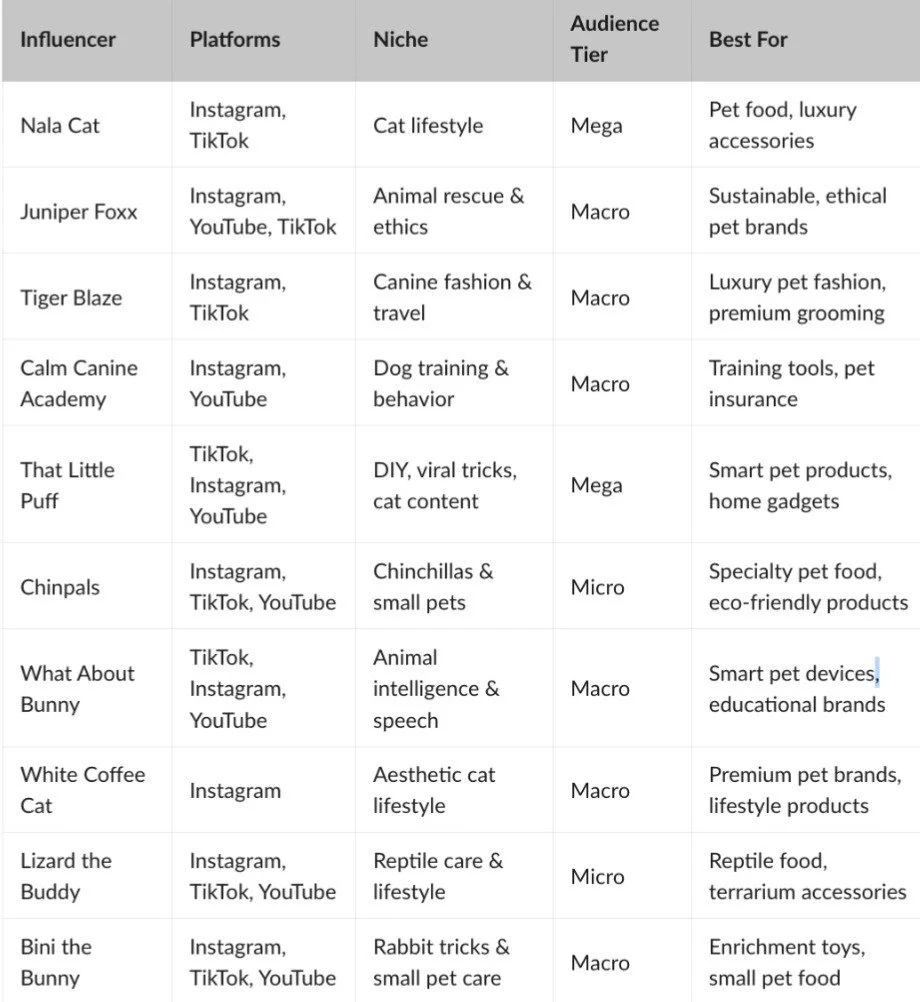
Nala Cat holds a Guinness World Record for Instagram fame. Juniper Foxx champions ethical animal rescue. Tiger Blaze mixes canine style with luxury aesthetics. Calm Canine Academy educates dog owners with authority. That Little Puff dominates TikTok with creative, viral content. Chinpals reaches small-pet enthusiasts nobody else does. What About Bunny sparks conversations about animal intelligence. White Coffee Cat delivers premium, aspirational cat content globally. Lizard the Buddy brings reptile culture mainstream. Bini the Bunny proves that tricks and talent earn serious attention.
1. Nala Cat: The world-record cat with proven brand power
Nala Cat is the most-followed cat on Instagram — a title certified by the Guinness World Records. Her content blends cozy lifestyle photography, product collaborations, and wholesome storytelling. She has partnered with brands including Bissell, Friskies, and PetSmart.
Her audience covers pet lovers, families, millennials, and Gen Z across Instagram and TikTok. That reach makes her ideal for brands that need instant credibility and mass awareness. Working with Nala puts your product in front of one of the most trusted audiences in pet content.
Key traits
Guinness World Record holder for most-followed cat on Instagram
Content style: lifestyle photography, dress-up, product endorsements
Proven track record with major pet and home brands
Partnership fit
Best for: Pet food, luxury pet accessories, lifestyle products
Audience: Pet lovers, families, millennials, Gen Z
Pros & cons
Pros:
Enormous reach and instant brand credibility
Highly relatable, feel-good content that audiences trust
Proven partnerships with established pet brands
Cons:
Mega-influencer pricing is likely out of reach for small budgets
Broad audience means less niche targeting
Notable brand partnerships
Nala has worked with Bissell, Friskies, and PetSmart. Each campaign generated strong engagement through authentic, heartwarming content. These partnerships show that product-aligned collaborations with Nala produce real results.
2. Juniper Foxx: The ethical animal ambassador
Juniper Foxx is a domestic fox influencer with a passionate following across Instagram, TikTok, and YouTube. Her content covers animal rescue, ethical pet ownership, and behind-the-scenes moments with multiple rescue animals. Opossums, raccoons, and snakes all make regular appearances.
Her audience skews toward eco-conscious consumers and wildlife enthusiasts who care deeply about ethical sourcing. She is a natural fit for sustainable brands that want to align with meaningful, cause-driven messaging. Juniper’s content doesn’t just entertain — it advocates.
Key traits
Rescue-focused content featuring a variety of unusual animals
Strong educational angle on ethical pet ownership
Cross-platform presence on Instagram, TikTok, and YouTube
Partnership fit
Best for: Sustainable pet brands, outdoor gear, ethical pet products
Audience: Eco-conscious consumers, pet owners, wildlife enthusiasts
Pros & cons
Pros:
Unique, distinctive niche with minimal direct competition
Audience is highly engaged and values-driven
Ideal for brands with a genuine sustainability story to tell
Cons:
May not suit brands with a purely commercial or mass-market tone
Exotic pet niche limits some product category fits
Notable brand partnerships
Juniper Foxx is best suited to brands that can tell an authentic ethical story. Her community rewards honest, value-aligned partnerships. Brands that prioritize purpose over pure reach will find strong ROI here.
3. Tiger Blaze: Where canine fashion meets lifestyle
Tiger Blaze runs a curated feed of high-end pet fashion, stylish accessories, and dog-friendly travel. The content is visually polished and aesthetically driven. This influencer is active on both Instagram and TikTok.
The audience consists of fashion-forward pet owners who view their dogs as lifestyle extensions. If your brand caters to pet owners who want their pets to look as good as they do, Tiger Blaze is the partner to call. Premium grooming products, luxury accessories, and travel experiences all thrive here.
Key traits
Strong visual brand identity rooted in fashion and aesthetics
Content covers pet apparel, accessories, and dog-friendly travel
Active on Instagram and TikTok for wide visual reach
Partnership fit
Best for: Luxury pet fashion, travel, premium grooming products
Audience: Fashion-forward pet owners, dog lovers, lifestyle enthusiasts
Pros & cons
Pros:
Highly polished content protects premium brand positioning
Natural fit for luxury and lifestyle product categories
Aesthetic consistency makes branded content seamless
Cons:
Narrower audience niche limits mass-market appeal
Premium audience may expect premium product quality to match
Notable brand partnerships
Tiger Blaze’s audience expects quality in every partnership. Brands that deliver aspirational, well-crafted products get the most engagement. Any brand selling premium pet lifestyle goods should consider this account.
4. Calm Canine Academy: The trusted voice in dog training
Calm Canine Academy focuses on dog behavior, training techniques, and myth-busting pet advice. Unlike most pet influencers, this account leads with education rather than entertainment alone. It is active on both Instagram and YouTube.
The audience is primarily dog owners seeking real solutions — first-time pet parents, concerned owners, and training enthusiasts. This makes Calm Canine Academy a strong partner for brands that need credibility and expert positioning. Products in training, behavior, and wellness perform best here.
Key traits
Education-first content on dog training and behavior science
Cross-platform presence on Instagram and YouTube for depth and reach
Expert positioning builds trust and authority with the audience
Partnership fit
Best for: Dog training tools, behavior-focused pet products, pet insurance
Audience: Dog owners, first-time pet parents, training-focused consumers
Pros & cons
Pros:
Expert credibility makes product recommendations highly persuasive
Audience actively seeks solutions — high purchase intent
YouTube presence allows deep-dive product demonstrations
Cons:
Educational format may not suit brands requiring purely entertaining content
Smaller entertainment-driven audiences may not follow educational accounts long-term
Notable brand partnerships
Calm Canine Academy is an ideal fit for brands that want to build authority in the training and wellness space. The audience’s problem-solving mindset creates strong conversion potential. Training tools, behavioral products, and pet insurance providers benefit most.
5. That Little Puff: The TikTok viral machine
That Little Puff is one of TikTok’s biggest cat accounts, known for creative videos, pet-friendly recipes, DIY projects, and trending challenges. The content is highly shareable and consistently goes viral. This account also runs on Instagram and YouTube.
The audience skews toward Gen Z and creative, entertainment-seeking viewers. The content style makes this account perfect for brands that want maximum visibility and viral potential. Home gadgets, kitchen tools, and smart pet products integrate naturally into the format.
Key traits
Specializes in viral, shareable content including DIY and food challenges
Massive TikTok presence with strong Instagram and YouTube support
Content is creative, fast-moving, and built for high shareability
Partnership fit
Best for: Home gadgets, kitchen tools, smart pet products
Audience: Gen Z, DIY lovers, entertainment seekers
Pros & cons
Pros:
Among the highest virality potential of any pet influencer
Content format naturally integrates product demonstrations
Cross-platform presence amplifies campaign reach
Cons:
Rapid content cycles can make brand messaging harder to sustain
Gen Z audience may be harder to convert on higher-priced products
Notable brand partnerships
That Little Puff’s DIY and food challenge format is custom-made for product integrations. Brands that provide a fun “reveal” or interactive element in their product will shine here. Home goods and smart pet tech brands should strongly consider this account.
6. Chinpals: The chinchilla niche nobody else owns
Chinpals is a chinchilla-focused influencer active across Instagram, TikTok, and YouTube. The content covers fun interactions, care tips, and engaging challenges featuring these small, distinctive animals. This account has carved out a genuinely unique space in the pet influencer world.
Most pet influencers chase cats and dogs. Chinpals reaches the underserved small-pet owner market with real authority. If your brand targets rabbits, guinea pigs, chinchillas, or exotic small pets, this is the account to partner with.
Key traits
Dedicated to small pets, primarily chinchillas — a rare niche
Multi-platform presence on Instagram, TikTok, and YouTube
Content blends humor, education, and everyday small-pet life
Partnership fit
Best for: Small pet food, eco-friendly pet products, educational content
Audience: Small pet owners, animal lovers, niche pet enthusiasts
Pros & cons
Pros:
Dominates an underserved niche with almost no competition
Highly targeted audience means less wasted impressions
Authentic community around a specific, passionate interest
Cons:
Smaller total reach compared to cat or dog influencer accounts
Product category fit is narrow — not suitable for mass-market pet brands
Notable brand partnerships
Brands targeting the small pet category will find this account invaluable. The audience is niche but deeply loyal and engaged. Specialty pet food and eco-friendly product brands are a particularly strong match.
7. What About Bunny: The speech-button dog redefining pet intelligence
Bunny is a dog famous for communicating through specialized speech buttons. Her videos exploring animal cognition and pet-human communication have captivated science enthusiasts and dog lovers worldwide. She is active on TikTok, Instagram, and YouTube.
This account appeals to tech-savvy, intellectually curious pet owners interested in what animals can do. It’s ideal for brands that want to showcase intelligence-focused products or ethical innovation in pet care. Smart pet devices and educational brands have a natural home here.
Key traits
Unique concept centered on speech-button animal communication
Strong appeal to science enthusiasts and tech-minded pet owners
Cross-platform presence on TikTok, Instagram, and YouTube
Partnership fit
Best for: Smart pet devices, dog training tools, educational brands
Audience: Science enthusiasts, dog lovers, tech-driven pet owners
Pros & cons
Pros:
Completely distinctive concept with no direct competition
Audience is curious, engaged, and responsive to innovative products
Strong YouTube presence supports longer product stories
Cons:
Very specific concept may limit the range of compatible brand partnerships
Audience interest is tied closely to the novelty of the communication angle
Notable brand partnerships
What About Bunny is perfect for brands that want to be seen as innovative and forward-thinking. Tech-enabled pet products and enrichment tools align particularly well. Any brand positioned around pet intelligence or enrichment should have this account on their shortlist.
8. White Coffee Cat: Aesthetic cat content for premium brands
White Coffee Cat is an Instagram-focused account built around high-quality, visually striking cat photography. The content is aspirational, beautifully curated, and consistently polished. The account has built a global fanbase of cat lovers who skew young and engaged.
This account is ideal for brands that rely on strong visual aesthetics. Premium pet food, stylish cat accessories, and lifestyle products all perform well with this audience. International reach makes it suitable for global campaign activations.
Key traits
Focused on aesthetic, high-quality Instagram photography
Young, international, and highly engaged global fanbase
Content style emphasizes aspiration and visual appeal
Partnership fit
Best for: Premium pet brands, lifestyle products, international campaigns
Audience: Cat lovers, Gen Z and millennials, international pet fans
Pros & cons
Pros:
Consistently high-quality visuals protect premium brand positioning
International audience expands campaign reach across markets
Engaged community responds strongly to beautifully integrated products
Cons:
Single-platform reliance on Instagram limits cross-platform amplification
Aesthetic-first format requires brands to match the visual standard
Notable brand partnerships
White Coffee Cat is the right partner for brands that want to look as good as they perform. Premium product categories thrive in this environment. If brand aesthetics matter to you, this account delivers.
9. Lizard the Buddy: The charismatic reptile star
Lizard the Buddy is a bearded dragon with a loyal following on Instagram, TikTok, and YouTube. The content showcases reptile lifestyle, fun antics, and practical care tips for exotic pet owners. This account makes reptile ownership approachable and entertaining.
The audience is made up of reptile enthusiasts and alternative pet lovers — a segment that most brands completely ignore. For brands serving the reptile or exotic pet market, this is a rare and valuable platform. Terrarium accessories, reptile food, and eco-friendly supplies are a natural fit.
Key traits
Focuses on bearded dragons and reptile lifestyle content
Active across Instagram, TikTok, and YouTube
Makes exotic pet ownership relatable and entertaining
Partnership fit
Best for: Reptile food brands, terrarium accessories, eco-friendly pet supplies
Audience: Reptile owners, exotic pet enthusiasts, alternative pet lovers
Pros & cons
Pros:
Reaches an underserved audience that other influencers miss entirely
Content is warm, engaging, and surprisingly broad in appeal
Strong niche authority converts well for relevant product categories
Cons:
Limited relevance outside the reptile and exotic pet product space
Smaller total follower count than mainstream cat and dog influencers
Notable brand partnerships
Lizard the Buddy is the go-to account for any brand in the reptile space. The niche has very few influencer voices this compelling. Terrarium brands and alternative pet food makers should move quickly on a partnership here.
10. Bini the Bunny: The trick-performing rabbit who went viral
Bini the Bunny is a rabbit famous for performing impressive tricks, including painting and playing basketball. He has appeared on The Tonight Show with Jimmy Fallon, bringing mainstream visibility to the small-pet influencer space. He is active on Instagram, TikTok, and YouTube.
His unique skills and engaging content set him clearly apart in the rabbit influencer niche. Brands targeting small pet owners, enrichment product seekers, or rabbit lovers will find a strong and proven partner here. Bini combines entertainment value with genuine purchase-driving influence.
Key traits
Famous for rabbit tricks including painting and basketball
Featured on The Tonight Show with Jimmy Fallon
Multi-platform presence on Instagram, TikTok, and YouTube
Partnership fit
Best for: Small pet food, eco-friendly pet products, enrichment toys
Audience: Rabbit owners, small pet enthusiasts, animal lovers
Pros & cons
Pros:
Mainstream media appearances give the account proven crossover appeal
Trick-based content is highly shareable and entertaining
Strong niche authority in the small pet space
Cons:
Rabbit-specific niche limits appeal for general pet brands
Mainstream coverage can attract casual viewers who don’t convert
Notable brand partnerships
Bini the Bunny is proven at reaching rabbit and small-pet audiences with genuine impact. Brands in enrichment, small animal food, and eco-friendly pet supplies will find strong partnership value. The mainstream media exposure also adds credibility to brand associations.
Frequently asked questions
Which type of pet influencer is best for a small brand on a tight budget? Micro and nano influencers offer the best value for smaller budgets. They have tightly engaged audiences and lower partnership costs than mega-influencers. Accounts like Chinpals or Lizard the Buddy are strong starting points for niche small-pet brands.
Do pet influencers only work for pet product brands? No. Pet influencers reach human audiences who happen to love animals. Travel brands, home goods, wellness companies, and even fashion labels have run successful campaigns with pet influencers. The emotional connection pets create translates across product categories.
How do I measure ROI from a pet influencer campaign? Set clear goals before the campaign starts. Track impressions and shares for awareness campaigns, engagement rates for community goals, and promo codes or affiliate links for direct sales attribution. Regular check-ins during the campaign let you adjust if something isn’t working.
Is follower count the most important metric when choosing a pet influencer? Follower count matters less than engagement rate. A 100K account with a 10% engagement rate will deliver more interaction than a 1M account with 1% engagement. Always request engagement data before committing to a partnership.
How long should a pet influencer partnership last? Longer partnerships build more trust. Research shows that 63.4% of brands prefer repeated collaborations with influencers because familiarity drives better results. A series of posts creates audience recognition that a single sponsored post cannot.
Which platform works best for pet influencer campaigns? It depends on your goal. TikTok drives viral reach and works best for younger audiences. Instagram suits visual, premium brands well. YouTube allows deep-dive reviews and tutorials. Choose based on where your target customer spends their time.
Conclusion: Find the right pet influencer and start growing
The pet influencer space in 2026 is rich with opportunity. From world-record cats to basketball-playing bunnies, there is a voice for every brand and every audience. The key is matching the right influencer to your goals — not just chasing the biggest follower count.
Engagement, audience alignment, and content authenticity drive far better results than raw reach alone. Think about who your customer is and which influencer speaks directly to them. That alignment is where business growth actually happens.
Ready to make your move? The Woof Agency helps brands navigate the pet influencer landscape and build campaigns that deliver real results. Visit thewoofagency.com to find your next brand partner and start growing today.